
BagMaster Isekai – Bag Battle
SayGames LtdStrategy
4.3349.00 Reviews
- Version
- 2.7.0
- Installs
- 1.00M
- Age Rating
- Everyone 10+
Screenshots
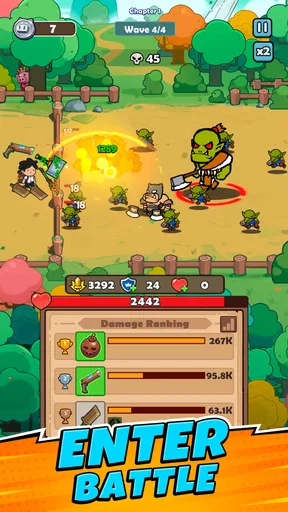
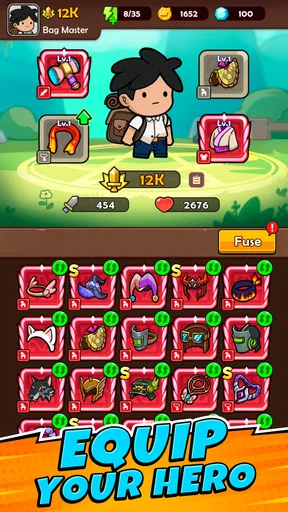
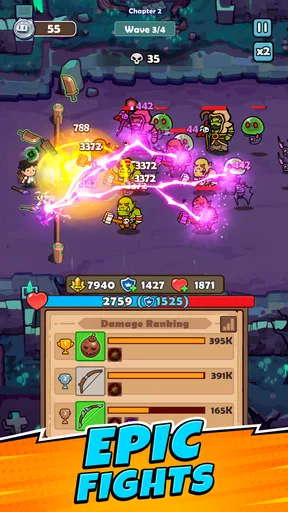
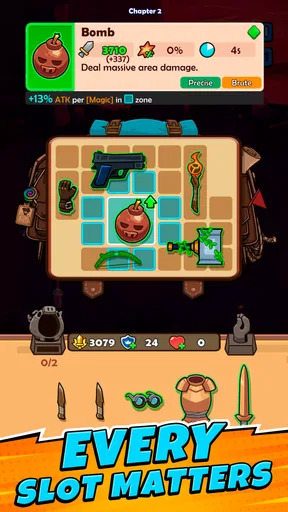
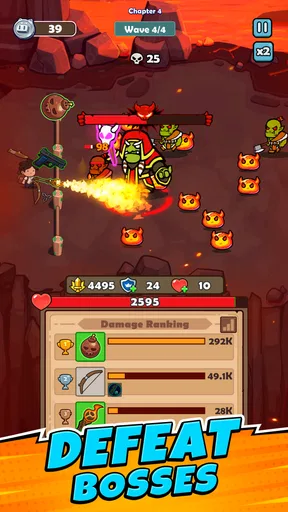
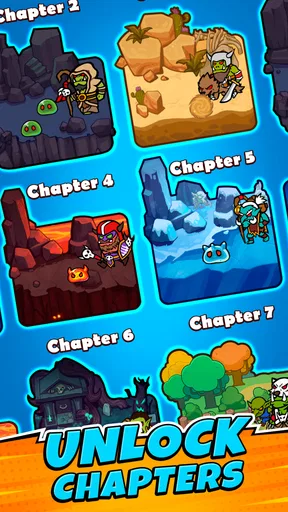
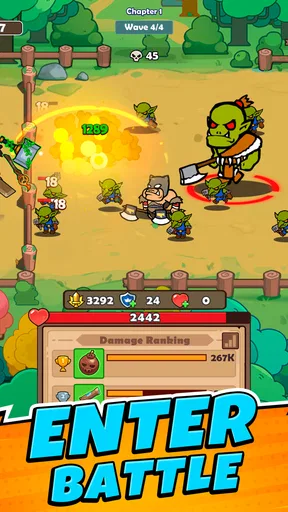
Our Review of BagMaster Isekai – Bag Battle
 Analysis by Appyee
I went into BagMaster Isekai – Bag Battle expecting a quick inventory puzzle with a fantasy wrapper, and that is broadly what I found: a strategy game built around arranging equipment, making smart combinations, and taking those choices into RPG-style battles. Its central idea is easy to understand, but the appeal comes from the small decisions between fights. Every item has to earn its place, and a backpack that looks powerful on paper can become awkward when its contents do not work together.
The game is free to download and is made by SayGames Ltd. It is aimed at players aged 10 and up, and the current Android release is version 2.7.0, compatible with Android 8.0 or later. That makes it accessible to a wide range of devices, although the real question is less about whether it runs and more about whether you enjoy slow, deliberate preparation between short bursts of combat.
How the current game feels to play
The basic loop is straightforward. I sort through weapons and other battle resources, decide how to use the limited space in my backpack, and then enter an RPG encounter with the build I have created. The battle is only one part of the experience. The more interesting test happens before it, when I have to decide whether a strong item is worth keeping, whether two weaker pieces make a better combination, and whether my layout is prepared for the next opponent rather than only the fight in front of me.
That structure gives the game a different rhythm from a conventional strategy title. In a typical turn-based RPG, I often make decisions during combat by selecting attacks, abilities, or targets. Here, much of the strategic work is moved into preparation. The backpack becomes a compact planning board. A player who enjoys arranging objects, comparing possible combinations, and refining a setup after a defeat will probably get more from it than someone who wants constant action.
I also like that the premise is immediately readable. You do not need a long explanation to understand why organization matters. The game presents a simple question: how can I make the equipment I have fit together as effectively as possible? That question remains useful even when the available choices are not ideal, because a less-than-perfect collection can still produce a workable plan if it is arranged carefully.
In everyday use, I found it most suitable for short sessions. It works well when I have a few minutes while waiting for an appointment or taking a break, because I can focus on one preparation decision without committing to a lengthy role-playing campaign. At the same time, the inventory layer gives those short sessions more substance than a purely reflex-based mobile game. I am not just tapping through a fight; I am trying to understand why the last setup worked or failed.
The backpack is the real strategy board
The most useful way to approach the game is to stop treating the backpack as storage. It is closer to a battle plan. A powerful weapon placed in an inconvenient position may be less valuable than a slightly weaker option that supports the rest of the loadout. I learned to judge items by how well they fit the whole arrangement, not by their individual strength alone.
This creates a trade-off that is easy to overlook at first. Holding onto every promising item can leave the bag cluttered and make future choices harder. Clearing space can feel wasteful, especially when an item looks useful, but a clean layout gives me more freedom to react. My practical advice is to keep asking what a piece contributes to the current build. If it has no clear role, it may be occupying space that a more compatible item could use.
Another helpful habit is to inspect the arrangement before starting a battle rather than changing it only after a defeat. I look for isolated pieces, awkward gaps, and equipment that appears strong but does not connect naturally with anything else. This small pre-battle check reduces the chance of entering a fight with a layout that was assembled automatically instead of intentionally.
The game also rewards thinking in layers. First, I consider whether the setup can survive the encounter. Then I look for ways to improve its offensive potential. Finally, I ask whether the arrangement leaves enough flexibility for the next reward or upgrade. That last question is important because a build that wins one fight but leaves no room for meaningful changes can become difficult to maintain.
Why the RPG battles matter
The battles give purpose to the inventory decisions. Without them, rearranging equipment would feel like a standalone packing puzzle. With them, every choice has a consequence. A victory tells me that the arrangement was at least functional, while a loss encourages me to examine the relationship between the items rather than simply blame one weak weapon.
I would not describe the combat as the main attraction for players who want deep, moment-to-moment control. The strongest decisions happen before the encounter. That is not a flaw, but it is an important expectation to set. If you prefer games where your quick reactions or detailed commands determine every exchange, this may feel too hands-off. If you enjoy preparing a build and then seeing whether your preparation holds up, the format makes more sense.
There is also a satisfying feedback loop after a failed battle. Instead of immediately searching for a completely different strategy, I can make a small adjustment: move one object, remove a poor fit, or rethink the balance of the bag. These incremental changes are more rewarding than random experimentation because they make the result feel connected to my decisions.
What has changed in the current release
The current release is version 2.7.0, and that matters mainly as a sign that the game is being presented in an established, actively maintained state rather than as an untouched first experiment. I would still separate that fact from any assumption about future content. A version number tells me which build I am using; it does not promise a particular roadmap, feature set, or long-term direction.
For someone returning after an earlier installation, the practical approach is to revisit the basics instead of assuming that an old routine remains optimal. The game’s core challenge is sensitive to small changes in available equipment and progression, so I recommend rebuilding familiarity by testing a simple, coherent bag first. That makes it easier to notice whether a new option genuinely improves the setup or merely looks stronger in isolation.
The release is also suitable for older Android devices because it supports Android 8.0 and later. I appreciate that this lowers the barrier to trying it, especially for players who do not use a recent flagship phone. Still, device compatibility should not be confused with identical comfort on every handset. Backpack management depends on seeing and manipulating several objects clearly, so a larger screen may make careful organization more pleasant than a very compact one.
Existing players should expect the same central identity: merge-oriented equipment decisions, backpack management, and RPG battles. I would not approach the update expecting it to become a traditional role-playing game with the inventory layer pushed into the background. The appeal remains tied to the packing problem, and that consistency is useful for players who already enjoy the formula.
Who will get the most from it
I think this game is a good match for people who enjoy light strategy, optimization, and the satisfaction of turning a messy collection into a functional build. It is especially approachable for players who want a game that can be understood quickly but still offers room to improve through better choices. The fantasy setting gives the equipment a clear context without requiring me to learn a complicated world before I can start making decisions.
It can also suit players who normally find mobile RPGs too demanding. Because the important planning happens outside the battle, I can play at a calmer pace. I do not need to keep up with a rapid stream of combat prompts. I can pause mentally, inspect the bag, and decide what deserves attention. That makes it a comfortable option for a relaxed session rather than an intense competitive one.
On the other hand, I would skip it if my main reason for playing strategy games is elaborate campaign planning, large maps, diplomacy, or direct control over many units. The game’s scope is narrower. Its strategy is concentrated in equipment selection and arrangement, not in managing a broad empire or commanding a large party across a detailed battlefield.
I would also be cautious about recommending it to anyone who dislikes inventory management. Some players see a full backpack as a reward; others see it as work. Here, the organizational layer is not an optional side activity. It is the heart of the experience. If sorting, comparing, and making space feels tedious to you, the battles may not provide enough compensation.
Three practical habits that improve the experience
My first tip is to build around a clear purpose instead of collecting impressive-looking pieces. When I try to make every item contribute to damage, the result can become fragile or disorganized. A more dependable approach is to decide what the setup needs most, then choose supporting equipment that reinforces that goal. This makes the bag easier to read and makes later changes more deliberate.
Second, I recommend leaving room for adjustment whenever possible. A completely packed arrangement may look efficient, but it can make a new reward difficult to test. Space is not always wasted capacity; sometimes it is strategic flexibility. I found this particularly useful when experimenting with unfamiliar combinations, because I could compare a new option without dismantling the entire setup.
Third, after a defeat, change one or two meaningful elements before rebuilding everything. This is a simple way to learn what caused the problem. If I replace the whole bag at once, a victory does not teach me much. If I alter the position or role of a specific item, the next result gives clearer feedback. That method turns failure into a practical lesson rather than a reason to discard the entire plan.
A fourth habit is to separate short-term survival from long-term efficiency. Sometimes the best decision is the one that gets through the next battle, even if it is not the most elegant arrangement. Other times, preserving a flexible layout is more valuable than squeezing out a small immediate advantage. Recognizing which situation I am in prevents me from judging every choice by the same standard.
Free access and spending considerations
The game is free to play, which makes it easy to test the central loop before deciding whether it deserves a place on your phone. In-app purchases range from $0.99 to $99.99 per item. That broad range is worth keeping in mind from the beginning, particularly for players who prefer to keep mobile gaming entirely free or who are sharing a device with younger users.
My advice is to treat purchases as a personal boundary rather than as part of the basic strategy. First learn whether you enjoy arranging the backpack and adapting builds. Spending money cannot make an inventory puzzle enjoyable if the organizing itself is not appealing. For players who do like the loop, setting a limit before browsing optional purchases is a sensible way to keep the experience aligned with the original reason for downloading it.
The age guidance is Everyone 10+, so families may consider it approachable for younger players within that range. Even so, the presence of in-app purchases means adults should be aware of the device’s purchase settings. The game’s accessible presentation can make it feel casual, but casual games can still encourage repeated decisions about progression and optional spending.
How it compares with other mobile strategy choices
Compared with a standard turn-based RPG, this game gives me less direct influence during the battle and more responsibility before it. That makes it faster to understand and easier to play in short bursts, but it may feel limited if I want a large menu of combat commands. Compared with a pure merge game, it adds a clearer reason for combining and arranging equipment: the result is tested in RPG encounters rather than existing only as a collection exercise.
It also differs from auto-battlers that focus mainly on selecting a team and watching synergies unfold. Here, the physical organization of the backpack is part of the decision-making. That extra layer is the reason I would choose it over a simpler automatic combat game, but it is also the reason I would not recommend it to someone who wants the least possible management.
Players who enjoy classic strategy campaigns may find the scope modest, while fans of compact mobile puzzles may appreciate the way each battle creates a concrete target for optimization. In my view, the game sits between those audiences. It is more thoughtful than a disposable action title, but less expansive than a full strategy RPG. Knowing that position helps avoid expecting a different kind of game from the one it is designed to be.
Where the experience still has room to improve
The central loop can become repetitive if I stop experimenting. Sorting similar items, making small adjustments, and entering another battle is satisfying for a while, but the format depends heavily on the variety and usefulness of the choices presented. Players who need a strong narrative, constant environmental change, or a large sense of discovery may eventually want more than the backpack-and-battle cycle provides.
There is also a possible friction point in the gap between understanding the rules and mastering the best arrangements. The basic idea is approachable, but a player can still lose without immediately knowing whether the problem was item selection, placement, or an unbalanced build. I found that deliberate testing helped, but anyone looking for instantly transparent strategy may find the learning process less comfortable.
The free-to-play structure is another consideration. The purchase range means some users will naturally wonder how much progress feels comfortable without spending. I would not make a decision based only on the download price. I would play enough to decide whether the core loop feels rewarding on its own, then judge optional purchases separately. That keeps the evaluation focused on the actual game rather than on the temptation to accelerate it.
Finally, the game is not the right substitute for a deeper RPG. It does not appeal to me in the same way as a title built around character relationships, exploration, or a long tactical campaign. Its strength is concentration: a small space, a limited loadout, and a battle that reflects those choices. That focus is enjoyable when I want something compact, but it naturally leaves out the breadth some players expect from the genre.
What returning and new players should watch
New players should watch their own reaction to the preparation phase. If I find myself enjoying the process of making room, testing combinations, and learning from a failed arrangement, that is a strong sign the game will hold my attention. If I am only waiting for the backpack section to end so I can reach combat, the design is probably working against my preferences.
Returning players should watch for changes in how their familiar setups perform rather than relying on memory. A build that once felt comfortable may not be the best answer to every new situation. I recommend keeping the basic logic of a successful arrangement while remaining willing to replace pieces that no longer support the whole. That mindset is more useful than chasing a single permanent solution.
I would also watch how the game’s future releases develop, while keeping expectations grounded. Version 2.7.0 is the current reference point, but a current version is not a guarantee of specific upcoming systems or content. The sensible reason to play today is whether the existing combination of backpack strategy and RPG battles works for you now, not a promise about what might arrive later.
With an average rating of 4.3 from around 48 thousand ratings and more than a million installs, the game has clearly attracted a substantial audience. Those figures suggest that its compact strategy formula has broad appeal, although popularity alone cannot tell me whether its inventory focus matches my taste. I would use the free entry point to make that judgment personally.
My final view is positive but specific. BagMaster Isekai – Bag Battle is at its best when I treat every backpack slot as a decision and every battle as feedback. It is approachable, easy to sample, and more thoughtful than its simple premise first suggests. I recommend it to anyone who likes merge mechanics with a strategic purpose and enjoys improving a build through small, understandable changes.
I would pass on it if I wanted a deep story, direct combat control, or a large-scale strategy campaign. For everyone else, the game offers a focused mobile experience with a clear identity. Start without spending, organize with a purpose, leave room to adapt, and judge it by how much you enjoy the preparation itself. If that part feels rewarding, the battles give your careful packing a satisfying reason to matter.
Verdict
Strengths of BagMaster Isekai – Bag Battle
- Quick battles make it easy to play during short breaks.
- Bag-building mechanics offer satisfying strategic choices.
- Anime-inspired visuals give the game a distinctive style.
- Frequent rewards help maintain progress without constant spending.
- Simple controls make it accessible for new players.
Limitations of BagMaster Isekai – Bag Battle
- Random item drops can make some battles feel luck-dependent.
- Progress may slow noticeably after the early stages.
- Repeated combat encounters can become predictable over time.
- The small interface may feel crowded on some phone screens.
- Online features may require a stable internet connection.
Other Releases by SayGames Ltd
View All
Turbo Stars - Rival Racing
Racing4.6

Johnny Trigger: Action Shooter
Action4.6

DOP 4: Draw One Part
Puzzle4.4

DOP: Draw One Part
Puzzle4.4
Similar Picks in This Category
View All
Clash of Clans
Supercell4.5

Plants vs. Zombies™
ELECTRONIC ARTS3.7

Lords Mobile: Kingdom Wars
IGG.COM4.5

Clash Royale
Supercell4.4

State.io — Conquer the World
CASUAL AZUR GAMES4.1

Car Driving School : Car Games
Spark Game Studios3.9
Frequently Asked Questions
What is BagMaster Isekai – Bag Battle?
BagMaster Isekai – Bag Battle is a strategy-focused RPG that combines inventory management with automatic or semi-automatic combat. You arrange weapons, equipment, abilities, and other items inside a limited bag space, then use that setup to fight enemies and progress through an isekai-inspired adventure. The main challenge is creating an efficient loadout rather than simply collecting the strongest individual items.
How does the bag-building and combat system work?
Before entering a battle, you organize your available items within the bag grid. The position, size, type, and combination of equipment can influence your character’s abilities and overall performance. Once combat begins, the prepared build generally determines how effectively your hero attacks, defends, and uses special effects. Experimenting with different layouts is important because a poorly arranged bag can make otherwise powerful items less useful.
Is BagMaster Isekai – Bag Battle free to download and play?
The game is generally presented as a free-to-download mobile title, but free access may be supported by advertising, optional purchases, or progression systems connected to premium currency. Players should check the current Google Play or App Store listing for the exact pricing and purchase information in their region. You can usually try the core gameplay without paying, although faster upgrades or additional resources may be available through in-app purchases.
Does the game require an internet connection?
Connection requirements can depend on the version and the feature being used. Basic progression may be available offline in some circumstances, but online access can be required for advertisements, account synchronization, events, cloud saves, updates, or server-based rewards. If you plan to play while traveling, test the game without a connection first and avoid assuming that every mode will remain available offline after installation.
Is BagMaster Isekai – Bag Battle suitable for casual players?
The game can suit casual players who enjoy short sessions, character upgrades, and experimenting with different equipment combinations. However, its inventory-based strategy may require more attention than a simple idle game, especially when stages become harder and bag space becomes limited. New players should expect some trial and error while learning item interactions. Optional purchases or advertisements may also affect the pace of progression, depending on how you choose to play.
Play our best games!


